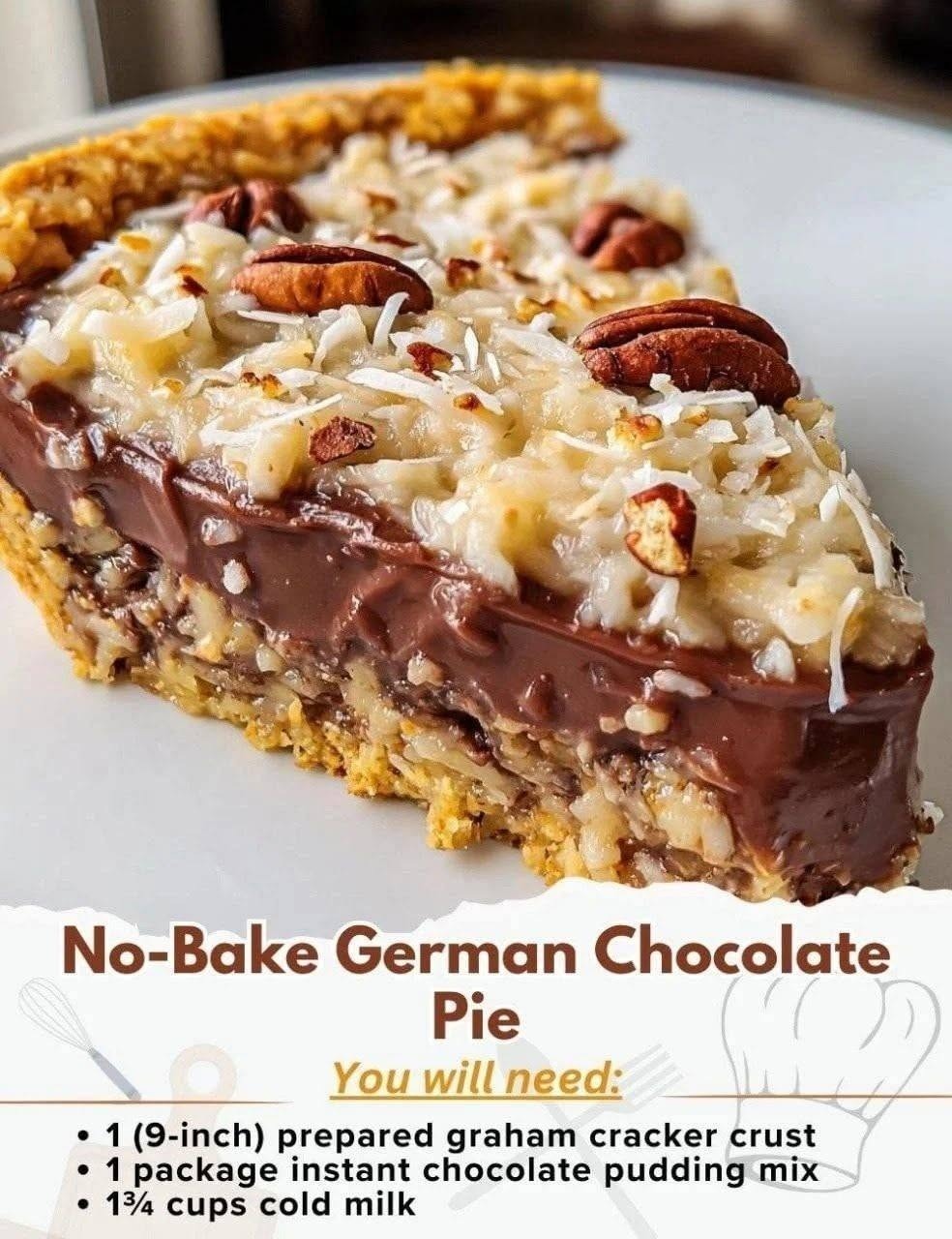
A rich, decadent dessert combining a crunchy chocolate cookie crust, silky chocolate cream cheese filling, and a classic buttery coconut-pecan topping with zero oven time.
📌 Recipe Overview
This No-Bake German Chocolate Pie captures all the iconic flavors of traditional German chocolate cake—rich cocoa, dark brown sugar, shredded coconut, and buttery pecans—in a cold-set pie format.
By combining an aerated chocolate cream cheese mousse with a stovetop caramel-custard glaze, this recipe delivers sliceable stability and balanced sweetness without requiring baked layers or gelatin.
📜 Origin of “German” Chocolate
Despite the name, German Chocolate Cake did not originate in Germany. The dessert traces back to 1852, when American baker Samuel German created a dark baking chocolate blend for the Baker’s Chocolate Company, named Baker’s German’s Sweet Chocolate.
In 1957, Texas homemaker Mrs. George Clay published a recipe using the chocolate along with a cooked coconut-pecan glaze. Its explosive popularity led to nationwide distribution, and over time, the possessive “‘s” was dropped, creating the popular misconception about its origin.
🥣 Equipment Required
-
9-inch pie dish (glass, ceramic, or metal)
-
Heavy-bottomed saucepan & whisk
-
Hand mixer or stand mixer
-
Rubber spatula
-
Measuring cups & spoons
🍫 Ingredients & Component Breakdown
| Section | Ingredient | Quantity | Functional & Culinary Role |
| Cookie Crust | Chocolate cookie crumbs | 1½ cups (150g) | Bittersweet, crunchy structural foundation. |
| Unsalted butter | 6 tbsp (85g), melted | Binds crumbs into a solid shell upon chilling. | |
| Chocolate Filling | Cream cheese | 8 oz (225g), softened | Adds rich body, slight tang, and cold stabilization. |
| Milk chocolate chips | 1½ cups (250g), melted | Provides sweet chocolate flavor and sets firm when cold. | |
| Powdered sugar | ¼ cup (30g) | Smoothly sweetens without adding graininess. | |
| Whipped topping | 8 oz (225g), thawed | Incorporates stable air cells for a mousse texture. | |
| Coconut-Pecan Layer | Evaporated milk | ½ cup (120ml) | Concentrated, rich dairy base for the custard. |
| Brown sugar | ½ cup (100g) | Delivers deep caramel and molasses notes. | |
| Unsalted butter | ¼ cup (55g) | Enriches texture and adds surface shine. | |
| Egg yolks | 2 large, lightly beaten | Thicken the custard via heat coagulation. | |
| Sweetened shredded coconut | 1 cup (90g) | Adds traditional chewy tropical texture. | |
| Chopped pecans | ½ cup (60g) | Delivers buttery nut crunch to contrast soft layers. | |
| Vanilla extract | 1 tsp | Balances dairy fats and aromatizes the topping. |
🧪 Food Science: Custard Thickening & Cold-Set Mechanics
-
Egg Yolks & Heat Coagulation: Cooking egg yolks with evaporated milk, butter, and brown sugar at 160°F–170°F (71°C–77°C) denatures egg proteins, forming a thick gel network that suspends the heavy coconut and pecans.
-
Thermal Protection During Assembly: The coconut-pecan custard must cool completely to room temperature before assembly. Placing hot custard onto the whipped chocolate filling melts the fat globules, collapsing trapped air bubbles and turning the middle layer runny.
-
Cold Lipid Solidification: Chilling the pie solidifies the butter in the crust and the saturated fats in the cream cheese and chocolate, providing structural integrity for clean slices.
🔪 Step-by-Step Instructions:
LOOK NEXT PAGE DEAR──►
For Complete Cooking STEPS Please Head On Over To Next Page Or Open button (>)